3 Surprising Truths About Testosterone and Men’s Health
Beyond the Number: 3 Surprising Truths About Testosterone and Men’s Health
For many men, the most frustrating place to be is a clinical "no-man's land"—a state of biological limbo where the body insists something is wrong, but the lab report remains stubbornly silent. Imagine a man in his late 50s struggling with the classic triad of androgen deficiency: a persistent, fog-like fatigue, a fading libido, and a loss of the physical vigor that once defined him. When he finally seeks help, his physician points to a "Total Testosterone" result and declares him perfectly normal.

This paradox is increasingly common because our traditional diagnostic tools are lagging behind our biological understanding. Landmark longitudinal studies—such as the European Male Ageing Study (EMAS), the T4DM trial, and the biochemical framework known as the Saturation Model—are currently dismantling the old guard of endocrinology. We are learning that the "normal range" is often a statistical abstraction that hides as much as it reveals. To navigate this new landscape, we must look beyond a single number and embrace three fundamental truths about how testosterone actually functions as a bioavailable fraction, a metabolic shield, and a receptor-limited hormone.
1. The Laboratory Mirage: Why Your "Total T" Often Misleads
The standard metric for male hormonal health is Total Testosterone (TT), yet this number is frequently a biological mirage. The reason lies in the "Free Hormone Hypothesis," which posits that testosterone only gains biological utility when it is not protein-bound. In the bloodstream, the vast majority of testosterone is "buffered" by Sex Hormone-Binding Globulin (SHBG) and albumin. Only the tiny fraction (typically 2–5%) that remains non-protein-bound, known as Calculated Free Testosterone (cFT), can enter cells to activate androgen receptors.
Research from Antonio et al. (2016) in the EMAS study, which followed over 3,300 men, reveals why looking at TT alone is insufficient. The study identified a critical diagnostic gap between men with low Total T and those with low Free T. The findings were stark:
Normal TT / Low cFT: These men were often older and appeared "normal" on standard tests. However, they were frequently in poorer health, exhibiting not just sexual and physical symptoms, but systemic markers of deficiency, including lower hemoglobin and significantly compromised bone density as measured by bone ultrasound parameters (BUA and SOS).
Low TT / Normal cFT: Conversely, these men—often younger and obese—presented with "low" numbers on paper but lacked the actual symptoms of androgen deficiency. Their lower Total T was merely a reflection of low SHBG levels, not a cellular lack of the hormone.
The clinical implications are profound. Relying solely on Total Testosterone results in a 9.5% false-negative rate. To put this in visceral terms: for every 1,000 men screened for androgen deficiency, 95 symptomatic men are denied potentially life-changing treatment because of an outdated preference for Total T. As Antonio et al. concluded: "Low cFT, even in the presence of normal TT, is associated with androgen deficiency-related symptoms... cFT levels should be assessed in men with suspected hypogonadal symptoms."

2. The Metabolic Shield: Testosterone as a Defense Against Diabetes
Beyond its role in vitality, testosterone functions as a potent metabolic regulator. The T4DM Phase 3b trial, a 2-year study by Wittert et al. (2021), provided definitive evidence that testosterone can serve as a metabolic shield against the onset of Type 2 Diabetes (T2DM).
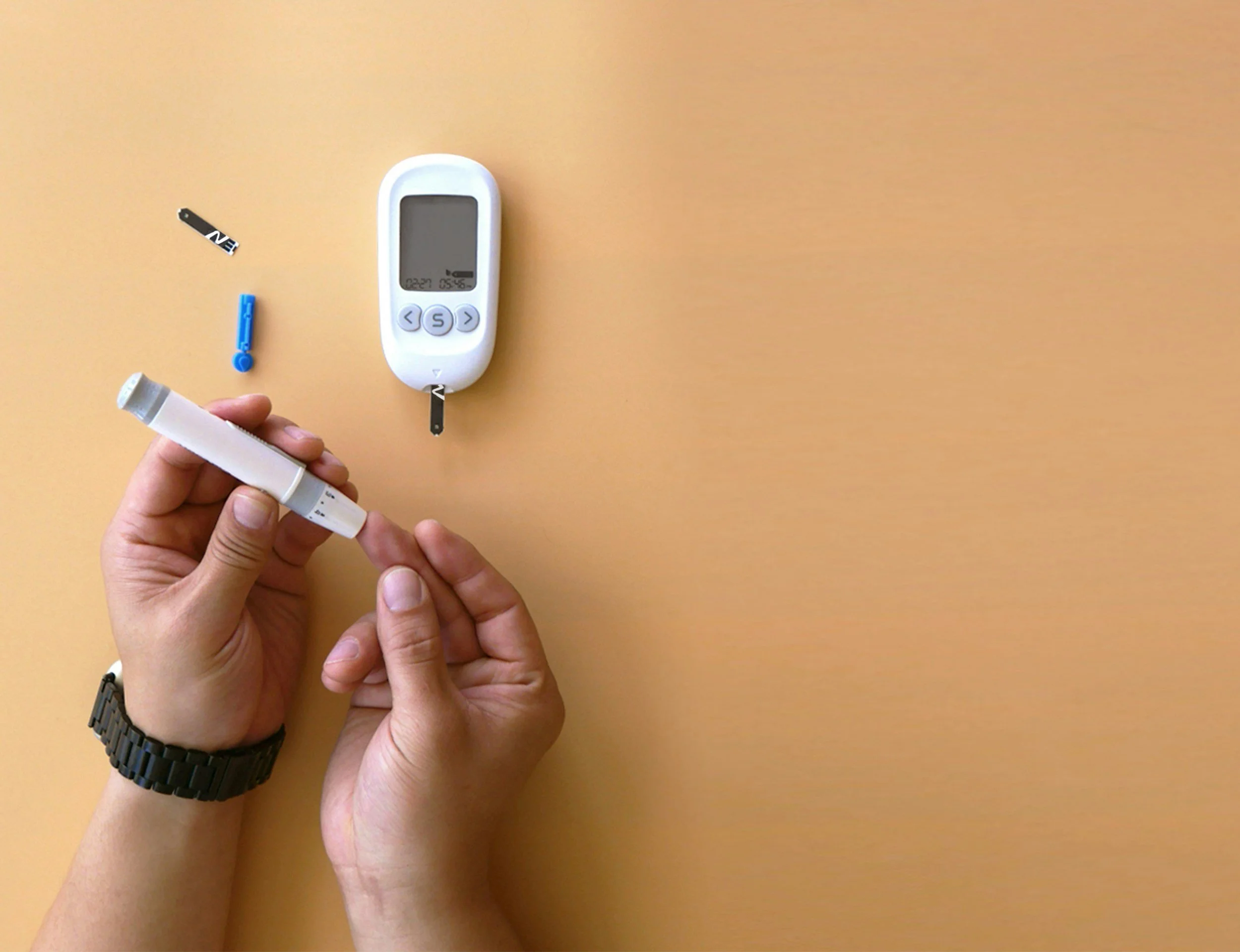
The trial followed 1,007 overweight or obese men with impaired glucose tolerance. All participants were enrolled in a structured lifestyle program through WW (Weight Watchers), but half received testosterone treatment while the other half received a placebo. At the two-year mark, the results were extraordinary: testosterone treatment reduced the risk of developing Type 2 Diabetes by 41% (Relative Risk 0.59). Notably, this benefit was independent of baseline serum testosterone, suggesting a broad pharmacological utility for men struggling with metabolic syndrome, regardless of where they start on the "normal" spectrum.
The "secondary wins" were equally impressive. The testosterone group saw significant increases in skeletal muscle mass and hand-grip strength, alongside greater decreases in abdominal fat. In this context, testosterone is not a "magic pill" but a biological accelerant. It creates a physiological environment where the effort put into lifestyle changes—like the WW program—yields superior metabolic returns.
However, a specialist’s perspective requires addressing the "safety trigger." In the T4DM trial, 22% of men in the testosterone group experienced an increase in haematocrit to 54% or higher, compared to just 1% in the placebo group. While testosterone is a shield against diabetes, it is a hormone that requires professional monitoring to manage potential side effects. As the T4DM researchers noted, this treatment "reduced the proportion of participants with type 2 diabetes... accompanied by increased muscle mass, grip strength, and sexual function."
3. The Saturation Model: Why the Fear of More is Unfounded
Perhaps the most persistent myth in men’s health is the linear relationship between testosterone and prostate risk. The long-held fear was that higher testosterone levels acted as "fuel for the fire" of prostate cancer. However, the "Saturation Model" proposed by Morgentaler and Traish (2009) has fundamentally debunked this concern using the principles of androgen-receptor affinity.
The model explains that prostate tissue is "exquisitely sensitive" to testosterone, but only at the very low, near-castrate range. At these near-zero levels, testosterone is indeed the rate-limiting step for growth. However, there is a specific "Saturation Point"—a threshold at which the androgen receptors (AR) within the prostate are fully occupied. Once this saturation point is reached, the tissue becomes insensitive to further increases in hormone levels.
Think of it as a bus with a fixed number of seats. If the bus is empty (castrate levels), adding passengers (testosterone) increases the occupancy. But once every seat is filled (the saturation point), adding 500 more people standing at the bus stop does nothing to change the number of people sitting inside.
This model explains why a man with a testosterone level of 900 ng/dL is at no greater risk for prostate stimulation than a man with 400 ng/dL. Most men within or even slightly below the "normal" range are already far beyond the saturation point. As Morgentaler concluded: "The evidence clearly indicates that there is a limit to the ability of androgens to stimulate PCa growth... a Saturation Model provides a satisfactory conceptual framework to account for the dramatic effects seen with castration as well as the minor impact of T administration in non-castrated men."
A New Era of Personalized Hormonal Health

We are moving away from an era of arbitrary laboratory ranges and toward a more sophisticated understanding of personalized endocrine health. By focusing on bioavailable "free" hormone fractions, recognizing the metabolic protection offered by androgens, and understanding the biochemical limits of receptor saturation, we can provide a much higher standard of care.
The data is clear: we can no longer afford to treat a single lab value as the "gold standard" of a man's health. If our current diagnostic preferences are missing nearly 10% of symptomatic cases, what other aspects of our endocrine health are we currently overlooking by focusing on the wrong numbers?